Google Brings Agentic Video Understanding to Ask YouTube
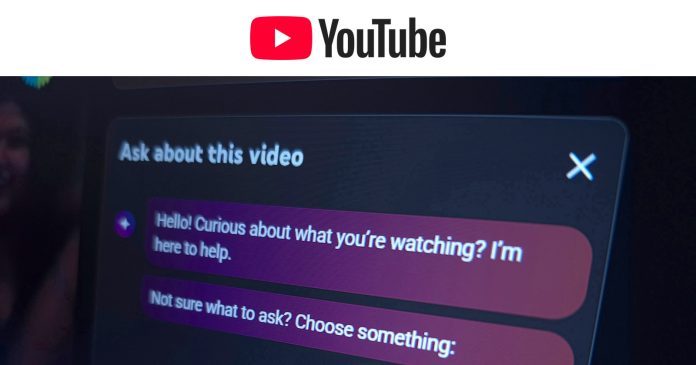
Google is rolling out a new video analysis capability for Ask YouTube that lets Gemini zero in on specific parts of a video, rather than processing the entire clip at a fixed sampling rate. This agentic video understanding will power the Ask YouTube feature on watch pages “in the coming months,” according to Google’s announcement, enabling answers grounded in what appears on screen.
The technology is already available to developers through the Gemini API in Google AI Studio and the Gemini Enterprise Agent Platform, supporting both uploaded videos and YouTube links.
What Changes for Ask YouTube on Watch Pages
Google’s blog post says the watch-page version of Ask YouTube will use this new processing to deliver higher-quality answers based on the video’s visuals. The company has not provided a specific launch date beyond “the coming months,” and hasn’t detailed which regions or languages will get access first.
The watch-page Ask YouTube feature is the button below videos that lets viewers ask questions while watching. This is separate from the search-bar version of Ask YouTube, which returns answers with cited videos as a search experiment. That version has been in testing since April, was highlighted at Google I/O in May, and remains limited to English-speaking users in the U.S., per YouTube’s help page.
During Alphabet’s Q2 earnings call in July, Sundar Pichai shared that more than 140 million users engaged with the watch-page feature in June. He also noted that Google is expanding the Ask experience to broader search surfaces on YouTube.
How Agentic Video Understanding Differs From Static Processing
Gemini’s default video mode, called static processing, extracts one frame per second and feeds every frame to the model, according to Google’s API documentation. Developers can adjust the sampling rate, but the model still processes the entire video.
Agentic video understanding works differently: it runs a dynamic loop where the model selectively loads parts of the video, adjusts the frame rate, and determines on its own whether to pull in frames, audio, or transcripts for a given segment. Google says this approach is better suited for finding split-second events, searching through multi-hour videos, detecting visual glitches, and counting repeated actions or objects.
Google reports that in benchmark testing, agentic video understanding reduces token usage by up to 88%, cuts analysis costs by up to 66%, and improves accuracy by up to 7% when compared to static processing. The efficiency gains are most significant with longer videos, though the API documentation notes that the new mode may slightly delay the start of a response on clips shorter than five minutes.
Why This Update Matters for YouTube Users
This change affects how the watch-page feature interprets the video you’re currently viewing. Google’s announcement does not specify whether the search version of Ask YouTube will also switch to agentic video understanding.
YouTube has not clarified how it determines which video becomes the primary citation in an Ask YouTube search response, nor why some videos are omitted entirely. As of September 2, YouTube’s help page for the search feature states only that its ranking system “prioritizes relevance, engagement, and quality,” which it says is similar to regular YouTube search. Google’s September 1 announcement adds no further details on rankings, recommendations, citations, or creator tools, and offers no guidance on optimizing videos for AI systems.
Timeline and What to Watch For
Google says the new video mode will appear in the Gemini app “soon,” with the watch-page Ask YouTube feature following “in the coming months.” No exact dates have been shared.
The watch-page help page is the place to monitor for updates once the rollout begins. As of September 2, that page says responses are generated from YouTube and the web, but it doesn’t yet explain how the video content itself is analyzed.
Featured Image: Nwz/Shutterstock. YouTube logo: Source: YouTube.