
Why celebrity-backed brands keep shutting down
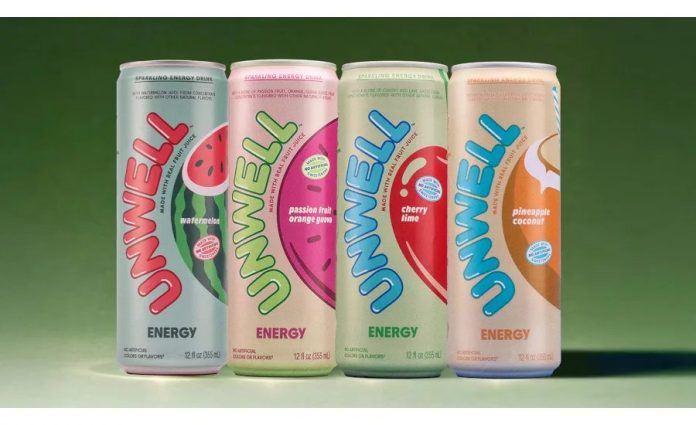
Just before this summer’s World Cup, where Lionel Messi made a global splash at the tournament, his hydration drink Mas+ shut down less than two years after its debut. Months later, Unwell, the functional beverage brand from influencer and podcaster Alex Cooper, announced a similar fate. Unwell, which sells electrolyte, energy and protein drinks, will be discontinued this fall after rolling out its Halloween-themed flavors.
Celebrity-backed brands, once viewed as safe bets thanks to founders’ built-in audiences, are hitting a wall as the market matures and consumer fatigue sets in. The high-profile exits of Mas+ and Unwell highlight a growing disconnect between mass-market demand and the creator-led economy. While a famous name provides the awareness needed to drive initial trials, it does not guarantee the consumer trust required to win in crowded categories like beverage or beauty. Once the initial buzz fades, these brands discover that retail is a velocity business — and no amount of social media following can replace product-market fit and operational discipline.
More celebrity brands have quietly closed
Failed brands have been on the rise among ultra-famous celebrities in recent years. Even Kim Kardashian is not immune. In 2025, after several pivots and relaunches, her beauty business Skkn quietly closed operations to consolidate products under the Skims banner. Earlier this year, Gwen Stefani’s beauty brand Gxve Beauty shut down, following the discontinuation of Drew Barrymore’s Flower Beauty last year.
Mas+ struggled despite strong distribution
In the case of Más+, it was positioned as a better-for-you alternative to Logan Paul’s Prime, tailored to athletes’ needs. The brand launched in partnership with Mark Anthony Group, parent company of White Claw, which helped it build deep distribution in its first year.
Despite the early hype and wide availability, Mas+ struggled to hit long-term sales goals in a saturated category. Like many celebrity-backed consumer products, the initial marketing push brought attention to the product. But once the buzz died down, convincing everyday consumers to make repeat purchases became much harder.
Why a famous face isn’t enough
Sunny Bonnell, founder and CEO of branding agency Motto, said the issue with brands built around a public figure is often a lack of focus, especially in overly crowded product categories.
According to Tastewise’s consumer intelligence data, functional beverages are growing over 29% year over year in 2026. The category’s explosive growth continues to attract new players trying to capitalize on demand. As of May 2026, The New Consumer reported that dozens of new beverage companies and products had already launched in the U.S. this year alone.
“Alex Cooper has obviously built enormous cultural equity around her voice, her point of view and has a big audience,” Bonnell said. “But that does not automatically equate to the audience wanting to buy a beverage from her.” She added that “there is a big difference between having attention and having permission to enter a category.”
Legal battles add another layer of risk
There are nuanced factors that can torpedo a brand’s chances. Bonnell pointed to the early trademark litigation Más+ was caught up in. “Ironically, that was with another celebrity brand,” she said, referring to Prime filing a lawsuit against Messi’s brand last year, alleging its creation hurt Prime’s sales. “That can create stigma around a brand and take attention away from it,” Bonnell said.
Retail rewards operators, not just names
Mark Gallo, a beverage sales and distribution manager who previously worked for Anheuser-Busch and Heineken, agreed that a famous figure’s following is purely an awareness asset.
“And retail is a velocity business,” Gallo said. “Those are not the same currency.”
For instance, the celebrity’s name helps convert the first purchase and drive trials. However, taste, effectiveness and price point drive the second purchase. “Most celebrity brands are a ‘me too’ formulation at a premium price, so there is no second purchase,” he said.
To a degree, Gallo said the lack of a celebrity or influencer could be considered an asset. “The founders that are doing actual operator work, like distributor meetings, retailer meetings and content for the brand, are at an advantage,” he explained.
What it takes for a celebrity brand to survive
Both Mas+ and Unwell were brought to market through partnerships with beverage giants, rather than the traditional founder-led startup model. Unwell launched in late 2025 as a joint venture with multinational CPG Nestlé.
Bonnell said these recent high-profile examples are further proof that plug-and-play celebrity brands will not survive without the right product-market fit and execution plan.
Mas+ bearing the name of Messi, who boasts 516 million followers on Instagram alone, is not enough for a national beverage brand to cultivate repeat customers.
“On paper, these brands have all the ingredients to succeed commercially,” she said. “But it takes more than a famous name and face to convince consumers to buy your product.”


