
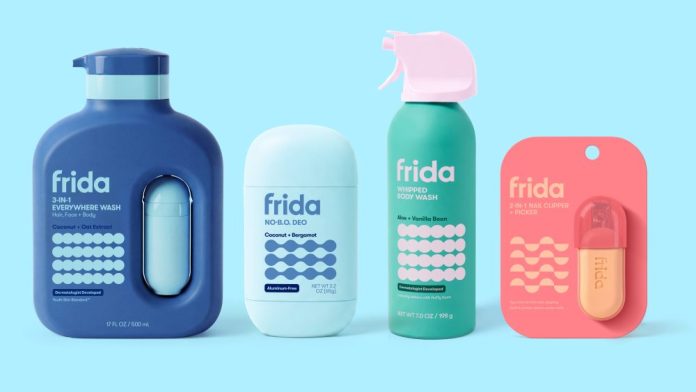
Frida launches a personal care line for older kids
Frida is entering kids’ personal care and hygiene with a new product line, marking its fourth category as the company expands beyond its baby-focused roots.
Frida for Kids includes 32 gender-neutral personal care and hygiene products — from whipped body wash to oral care to nail clippers — launching this week at Walmart, Amazon, and Frida.com. The company first made a name for itself in 2014 with the Snotsucker nasal aspirator, a baby registry staple. Since then, it has grown to include Frida Mom, a line of mass-market postpartum care products, and Frida Fertility.
CEO and founder Chelsea Hirschhorn said Frida for Kids targets families who have outgrown “tear-free baby shampoo” but aren’t ready for adult-oriented body care. The products are designed to help kids build hygiene habits, like timed, light-up electric toothbrushes that make brushing more engaging.
“We’re not just jumping into a personal care category with generic products,” she told Modern Retail. “Parents can expect the same level of thoughtfulness and ‘Why didn’t I think of that?’ ingenuity that they’ve gotten throughout their first chapter of parenthood from us.”
The launch comes months after Frida faced online backlash over marketing copy that used sexual innuendos. Critics pointed to past advertisements and packaging, including the side of Frida’s 3-in-1 thermometer box, which reads, “How about a quickie?”
Hirschhorn said the criticism was a reminder of how quickly internet discourse can escalate. She credited her team for handling the episode gracefully and said it reinforced that brands have a responsibility to “meet the moment from a tone perspective” and stay mindful of brand hygiene.
“We’ve been able to filter out the noise from the real feedback and honest perspectives that were shared, and I think we’ve done a really great job showing up in a different way than maybe we did over a decade ago, in some of the things that were resurfaced,” she said.
Still, the company isn’t abandoning humor. The Frida for Kids tagline is “Do It Yourself Care,” and the marketing leans into the realities of raising kids. One campaign pulled out lines like “Kids know every Fortnite cheat code but can’t wash behind their earlobes,” and “Kids can spend 45 minutes filming a GRWM but can’t brush their teeth for two.” Promotions span creators, earned and paid media, and retail, with the Walmart launch featuring an end cap in the personal care section.
“The marketing remains committed to supporting parents with unbridled honesty and infusing a little bit of levity,” Hirschhorn said. “The feedback has been incorporated in a way that we show up for our core consumer, but they can always expect authentic storytelling and lived moments from the brand really honestly.”
Pricing was also central to product development, Hirschhorn said. The products range from $6.99 to $19.99 — not the cheapest on the shelf, but priced to remain accessible as parents trade down in other areas.
“We’re within a sweet spot that I think will resonate with this consumer given the trade-offs they’re being forced to make in other areas of their life,” she said.
Frida enters a growing field of brands targeting the “Sephora tweens” demographic. Evereden, a skin-care company for tweens and teens, launched in Sephora last fall after crossing $100 million in sales. Shay Mitchell co-founded Rini, a startup offering face masks for kids who want to join beauty rituals without clinical ingredients. Unilever’s Dr. Squatch launched Lil’ Squatch bar soaps in kid-friendly scents like grape, melon, and apple.
Succeeding in this space means appealing to two distinct audiences: price-conscious parents and Gen Alpha kids drawn to trends they see on social media. A PwC survey this year found 97% of 7- to 14-year-olds say they make some purchasing decisions independently, and 34% said they chose skin care or beauty products on their own.
Frida for Kids took about two years to develop, led by Hirschhorn with a dedicated internal team that includes her father and sister, both dermatologists. The idea came from her own experience raising four kids of different ages who were outgrowing baby products but still needed help mastering hygiene routines.
“The scent of musky woodsman doesn’t really ignite the spirit for my 12-year-old, nor does the Paw Patrol character,” she said. “And so I was left sort of bouncing between these two categories where I really want to graduate the diaper aisle, but nothing was meeting the need holistically when it came to morning and evening hygiene and health-care routines.”
The line covers body care basics like shampoo, conditioner, and body wash with built-in travel containers, plus aluminum-free deodorants in a twist-up shape for smaller hands. Hirschhorn said the formulations use “non-actives that get the job done without any extras.”
Oral care is one of the more distinctive segments. The electric toothbrushes light up for two minutes to guide brushing duration, then glow red so parents can confirm the child actually brushed. Toothpaste comes in a dispenser that releases a dentist-recommended “pea-sized” pump, and the flosser is braces-friendly.
“Innovation alone is one thing, but being able to leverage the cultural tailwinds is a really important part of our strategy,” she said. “We’re not purporting to solve for fun and games in incorporating beauty and skin care at a younger age. We’ll leave that to others. But we are saying that if they are going to engage in it, they should at least have the basics down pat.”


