
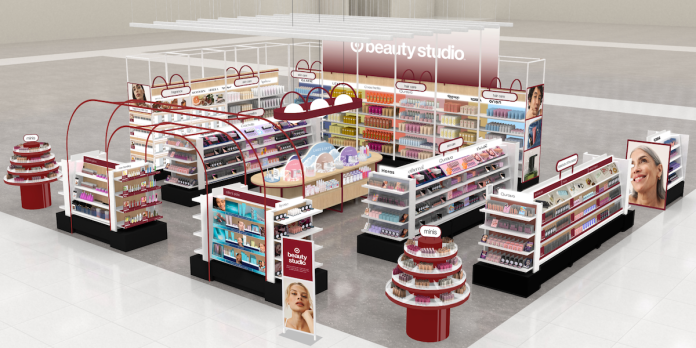
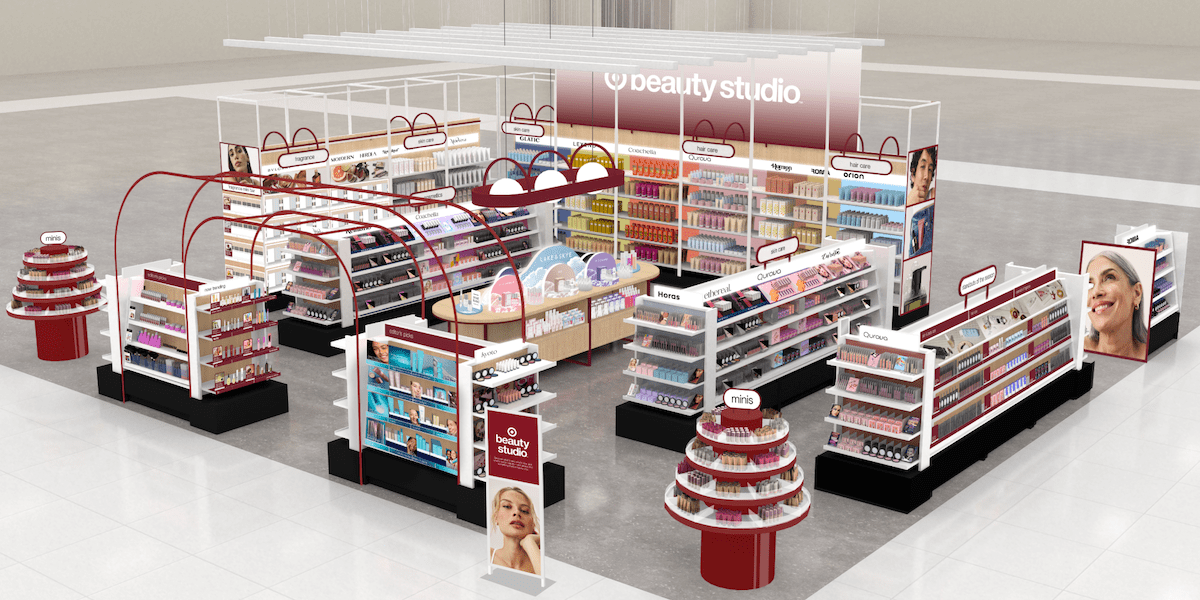
Walk into a Target store today and you’ll find far more K-beauty brands than a year ago, as the retailer chases the latest style trends and Korean brands push deeper into U.S. mass retail.
Earlier this year, Target quadrupled its K-beauty assortment with more than 150 new products and more than 10 new brands across skin care, makeup and hair care, according to the retailer. With the launch of Target Beauty Studio earlier this month, Target said in a fact sheet that it brought six “K-beauty cosmetics favorites” into the selection, alongside K-beauty products available across its broader beauty aisles. Five of the six brands are new to Target. The moves are part of Target’s effort to refresh its assortment and shopping experience, which it hopes will drive a return to long-term financial growth.
The new beauty selection replaces the former Ulta Beauty shops inside Target stores and features more than 1,600 products from 90 brands, largely new to Target. Among the K-beauty names in the Beauty Studio lineup are Amuse, Kaja, Rom&nd, Dr. Melaxin, Purito Seoul and Sungboon Editor, according to Target. Beyond the brands Target explicitly labels as K-beauty newcomers to the Beauty Studio, Modern Retail found roughly a dozen brands in the launch tied to Korean owners or founders, including hair-care brand Aromatica and skincare brand Voesh.
Target’s K-beauty lineup signals a shift for Korean brands and beauty practices toward big-box retail, moving beyond specialty players like Sephora and Ulta that have long been the sector’s home base. Ulta added 13 K-beauty brands last year across makeup and skin care, according to Glossy. Sephora partnered with South Korean beauty retailer Olive Young this year to launch 19 K-beauty brands in its U.S. stores and online, New York Magazine’s The Strategist reported in August. Olive Young has also recently started opening
.
“The fact that so many K-beauty brands are entering major retail channels proves that Korean cosmetics are actively leading the global beauty market,” Jinwoo (James) Kim, a leader with the America region for Dr. Melaxin, which is Korean-owned and -founded, told Modern Retail. “Unlike in the past when it was a temporary trend, it’s now clear that everyone is genuinely interested, which has significantly raised consumer expectations and standards.”
Other areas of representation remain thin in Target’s new Beauty Studio assortment. As previously reported, Modern Retail could only identify two brands with Black owners or founders in the new 90-brand beauty assortment: hair-care brand Briogeo and Glamazon Beauty, a cosmetics line.
Target said the Beauty Studio assortment is not static and will keep adding new brands and products regularly in response to guest interests, emerging trends and beauty innovation. Interest in K-beauty has skyrocketed over the past two years, Target said, driven by its innovation, playful design and value.
“Target’s beauty strategy starts with understanding what its guests want — high-quality products at accessible prices, assortments that reflect their personal style and experiences that make shopping feel inspiring and effortless,” the company said in a statement. “By bringing sought-after Korean brands and products into a mass retail environment, Target gives both K-Beauty enthusiasts and guests who are newer to the category an easy way to discover and incorporate K-Beauty into their routines.”
One factor that helped two of the brands, Purito Seoul and Aromatica, land in the Beauty Studio was that neither had U.S. exclusivity with Sephora or Ulta, despite those retailers’ expansion efforts, said Daniella Jung, founder and CEO of Muskat Beauty, the distributor for both brands. Muskat is new to the U.S. market. The company ran a small pop-up event in Los Angeles last year to build awareness stateside and reached out to a Target merchant about a year ago, Jung said.
Jung said leaders of Korean or K-beauty brands typically think of Sephora and Ulta when weighing U.S. opportunities, but the Beauty Studio launch could push them to consider the wider U.S. retail market, including CVS, Walmart and national grocery chains. “A lot of beauty brands will enter into a new retail space in the U.S. within two years, I think.”
Still, Jung cautioned Korean brands that entering U.S. retail isn’t just about creating viral moments on social media — it’s an operational challenge. “They have to be ready to expand within the major U.S. retailers, which requires inventory control ability and price control, and they need to have the right marketing strategy for the [U.S.] market,” she said.
Vera Oh, co-founder and CEO of Voesh, a Korean-owned and -founded brand, said she met Target buyers at the Cosmoprof conference in Las Vegas last year. The Beauty Studio carries Voesh’s serum body scrub wash, serum body cream, deodorant balm and shimmer body oil. The brand is also sold at Ulta Beauty, Revolve and Anthropologie.
“We specifically developed this collection with the Target shopper in mind, … built as a simple K-beauty body-care routine: cleanse, treat, moisturize, finish,” Oh said. “A lot of it comes from what we’ve learned over a decade working with spas on our professional side, what people actually respond to in texture and fragrance. We wanted Target customers to walk away with a new K-beauty body care ritual, not just a new product.”
Oh said she believes retailers no longer treat K-beauty as a trend but as a source of innovation across skin care, makeup and hair products. “We’re past the first wave: sheet masks, essences, 10-step routines,” she said. “Now it’s less about specific products and more about a way of thinking: good ingredients, real efficacy, better everyday routines.”
Dr. Melaxin’s Kim said the product line was developed for the diversity of Target’s customer base, so it included products targeting issues such as eye wrinkles, skin texture and brightening. Exclusively at Target, the brand sells a small version of its Peel Shot black rice exfoliating ampoule.
“While specialized beauty retailers like Ulta are crucial, we strategically wanted to enter Target to simultaneously expand our touchpoints with everyday consumers in their routine paths and build brand credibility,” Kim said. The brand previously launched at Ulta this year and is also in Costco, Nordstrom and Amazon. Target reached out to the brand because of its online sales figures, according to Kim.
“We weren’t just passively waiting,” Kim said. “We were just about to express our interest in entering Target as well.”
Another brand in the lineup, the makeup line Kaja, initially launched in collaboration with Sephora in 2018, according to WWD. In addition to Target, the brand remains available at Sephora, Ulta Beauty, Macy’s and Nordstrom, and online. Kaja worked with Target to curate 40 SKUs across eyes, including its Beauty Bento eyeshadow trios, Wink Stamp eyeliner, Cheeky Stamp blush and Juicy Glass lip collection, said Dino Ha, founder and CEO of Seoul-based Memebox, which operates Kaja.
“We saw an opportunity to introduce more consumers to the creativity, innovation and effectiveness that define Korean beauty through a retailer they already know and trust,” Ha said. “It’s about making K-beauty more accessible and creating an exciting discovery experience for consumers.”
Ha said he isn’t surprised by the large share of K-beauty brands in the Beauty Studio lineup. He said K-beauty has become more integral to the mainstream beauty conversation rather than being treated as a niche category.
“What we’re seeing today is the result of years of innovation, consumer education and growing demand for Korean beauty products,” Ha said, adding that Korean beauty had previously been recognized largely for skin-care innovation. “Now, we’re seeing retailers embrace the full spectrum of what K-beauty has to offer, including makeup, lip products and innovative application formats.”


