
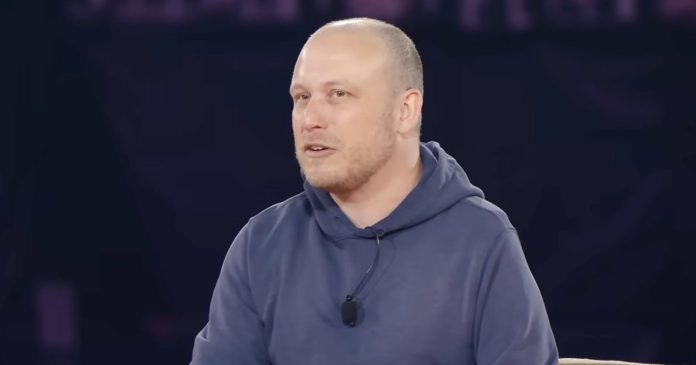
In a recent interview with Y Combinator’s Diana Hu, Boris Cherny, creator and head of Claude Code at Anthropic, shared that Claude Code is more capable than most users realize. He argued that prompt engineering is largely not important and that users would benefit more by ignoring AI influencers on social media and focusing on clear, direct tasks.
Prompt Engineering Is Less Relevant Today
Cherny emphasized that Claude Code does not require meticulous prompts, citing an internal experiment where an engineer gave Claude access to OpenCV (Open Source Computer Vision Library), a library of thousands of real-time vision algorithms. When asked to draw images, Claude did so successfully—a completely unexpected capability.
The anecdote illustrated that Claude Code’s capabilities far exceed the need for “prompt engineering.” Hu then asked about model elicitation—the process of unlocking hidden capabilities—and how users can improve at it.
Diana Hu asked:
“And the big area of research for this is basically model elicitation, right? Becoming really good at figuring out all these capabilities and asking the model to do the right thing, right?
How do people get better at that? And effectively, how do people get better at prompt engineering? Do people still need to do a lot of prompt engineering or is that changing as well?
Tell us about where this is going.”
Cherny stressed that the key is giving Claude tasks that seem a bit too hard—beyond your expectations of what it can do. This was the purpose of the OpenCV example.
Cherny answered:
“Yeah, I remember like a year ago, one of the most popular job openings was prompt engineer. And then it kind of changed and then I think it became like context engineer. So there’s these kind of waves of it, I think these will kind of like come and go.
I think the skill nowadays is less about prompt engineering and more about figuring out how do you give Claude a hard task that seems a little bit too hard? And then how do you make it possible for Claude to verify its work along the way?
And the verification, I think, is probably the single most important thing that people do not get right, largely.”
Cherny described giving Claude Tag (an agent within Slack) access to a Mac virtual machine for a complex programming task. He asked it to rewrite the Claude desktop app from the Electron framework to Swift, using a simple, direct prompt that avoided overthinking.
Here’s his description of the task and the prompt:
“And then I was like, OK, now what I want you to do is I want you to rewrite the Electron app in Swift. I want you to run the Electron app in the Mac virtual machine, screenshot it, and then look pixel by pixel, compare it to the Swift version.
Don’t stop until you’re done.
…So this is really one of those examples where the model can do it today, you just have to let it do it, and you don’t need the fancy stuff.
You don’t need /goal, you don’t need /loop. These help. But really all you need is give the model the task, give it a way to verify the output of its work so it doesn’t get stuck, and it’ll just go.
…And actually, in this case, Claude also decided to live blog it. So what it did is it created a Slack channel internally, and it started just posting screenshots every few minutes of its progress.”
How Claude Code Users Can Become More Expert
Hu expressed surprise that a complex task could be done with a simple prompt and asked how users can become more expert with Claude Code. Cherny said prompting must be done empirically—through experience and observation.
She asked:
“What is separating the people here that can become the top 1% Claude users? How can people learn to use Claude like Boris?”
Cherny replied:
“Maybe like, don’t listen to the LinkedIn influencers. Don’t listen to, don’t read Twitter.
This is the thing about the model is I think everyone’s looking for like the one weird trick to do it. That doesn’t exist, there’s nothing like that.
The way the model works is you have to approach it empirically. You have to give it a task that’s too hard.
You have to give it the tools to verify the work, like you would yourself, like you would if you were doing the task.
You have to see where it struggles, and then you have to fix that, either with better prompting or with a skill, or if the model is missing context, give it an MCP so it can pull in the context that it needs. That’s kind of it.”
Over-Specifying Is Self-Defeating
Hu remarked that the approach sounded simple. Cherny agreed but noted that people tend to overthink it, especially those with years of coding experience who are used to over-specifying tasks.
He continued:
“I think people tend to over-engineer. Because I think, in a lot of ways, when we built systems in the past, that’s the way you had to do it.
So when I look at engineers that have been coding for a long time, for years or for decades, this is a really, really common failure mode, is trying to over-specify, and it’s trying to be overly specific, and get the model to do the task exactly the way that you would have done it.
And that’s just not the way the model works.
But I think a lot of people are unlearning this, and it’s a journey to unlearn it. It’s a journey to kind of figure out how do you treat this thing like you would a coworker.
I think that’s the level of intelligence that it’s at now.”
Takeaways
- Prompt engineering matters less than giving Claude clear instructions and ways to verify its work.
- Claude has advanced to the point where many “prompt engineering” tricks are no longer necessary.
- Claude Code is capable of more than many users realize.
- Challenge Claude Code with harder tasks.
- Giving things a try and seeing how they work out can be useful.
- Don’t overthink prompts.
Watch Boris Cherny’s Interview:
Featured Image by Shutterstock/RixAiArt


