

Many content marketers argue that AI-generated text can’t match human writing. Neville Medhora disagrees. A veteran copywriter, he puts AI at roughly 95% of human quality — even for demanding work.
“It’s a hard pill to swallow, but you’ve got to adapt,” he told me.
Neville founded Swipe File, a curated library of promotional content, and previously ran Kopywriting Kourse, an instructional site.
He first appeared on the podcast in 2018. In our latest conversation, he tackled AI content and how marketers can adapt to it.
Eric Bandholz: Tell our listeners what you do.
Neville Medhora: I run a site called Swipe File, a library of ads, emails, and campaigns to inspire marketers. Before that, I ran Kopywriting Kourse, which was a cash cow for years. I’m a long-time copywriter — a freelancer, a publisher, and an instructor.
With AI, you don’t really have to learn copywriting. Initially the results were pretty good; then they improved. AI now outperforms what most people can produce. I can still write an article better than AI, but you have to give me at least three hours. AI can be 95% as good, maybe even 100%, and it can produce 50 versions.
But my own newsletter and copy are 100% human.
Bandholz: I don’t receive a cold email anymore that isn’t AI. I can spot it plain as day, and it turns me off.
Medhora: I’ve followed AI for a long time. It keeps evolving, and it’s based on humans and how we learn. With the right formula, it can emulate a human brain. I don’t see what’s controversial or weird about that.
It can already do a pretty damn good job, but it still lacks a few things. I categorize writing as easy, medium, and hard. AI solves easy writing, such as generating a headline for this episode from the transcript.
An example of medium writing is an email update from an ecommerce store.
Hard writing is venture capitalist Marc Andreessen pontificating about the world and business on Twitter. That’s high-level writing. It might be short, a small thought. But even so, AI is 95% there.
My Instagram posts used to produce really crappy results. Now AI makes good images and good posts with pretty good results. I’m not sure why people are so afraid of it.
I’m a writer, a creative person. Initially AI stung for a while. Then I regrouped. Instead of writing one email for a client, maybe I can write thousands.
It’s a hard pill to swallow for some people, but you’ve got to adapt.
Bandholz: An essential skill in 2026 is tweaking and massaging AI copy.
Medhora: I don’t think people mind AI writing, but they do mind being fooled into thinking it came from a human. At the beginning of my newsletters, I say it’s 100% human-written, with AI help for the images. People like that transparency.
AI-generated articles can be good, but they’re different from my style. I recognize and adjust it for important pieces.
Bandholz: Do you have a favorite AI model for writing?
Medhora: No, not just one. I use ChatGPT and Gemini a lot. I use Grok, especially for spicy questions — Grok is a little more unhinged. I use Perplexity sometimes to test the others.
For writing, the platforms are all roughly the same, within three months of each other.
For images and video, there are very real differences. ChatGPT Image 2.5 is vastly better than 2.0, which was much better than Google’s Nano Banana.
Bandholz: For basic chat, Grok is my go-to. I even like Grok’s image generation. However, I haven’t found differences from an editing standpoint. I’m implementing an AI-generated SEO strategy and content. I don’t want a single human to read it, just other robots.
Medhora: I’m going to Ahrefs’ SEO conference in a month. It’s the big topic — SEO, GEO, AEO, whatever you call it.
How do you spread a lot of content across the internet — video, audio, text, images, et cetera — so AI models can scrape it? That seems to be your strategy. It’s a lot like traditional SEO where the goal is more links.
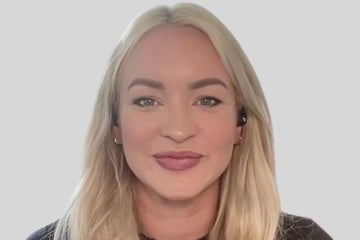
Bandholz: Let’s talk about Swipe File. It’s a beautiful website.
Medhora: Swipe File feeds my newsletter. I find stuff, post it, and include it in the newsletter. I post about three items per day. The idea is to inspire marketers.
For advertising inspiration, click the ads sidebar for many examples.
We have a tool called Remix. Enter your URL, such as Beardbrand.com, and Remix learns your website and sends you tailored content ideas.
Remix costs just $200 per year. It’s a great value.
Bandholz: Where can people follow you, support you, reach out?
Medhora: The best place is SwipeFile.com or SwipeFile.com/remix. I’m on all the socials: X, Instagram, YouTube, and LinkedIn.


