

Learn how local businesses can improve AI search visibility through accurate listings, fresh reviews, broader mentions, and coordinated brand activity.

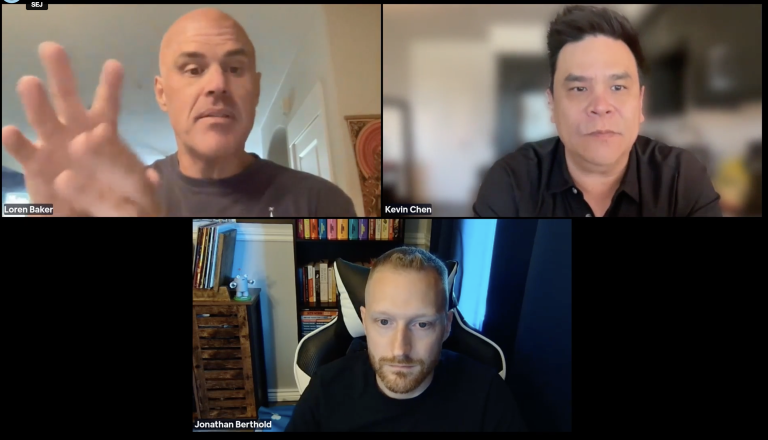
I recently hosted the opening session of SEJ Live with Kevin Chen and Jonathan Berthold from Moz, the session sponsors. Kevin, VP of Business Development, and Jonathan, VP of Revenue, shared insights throughout the hour.
We spent most of the session on questions attendees submitted in advance. Here’s a summary of that discussion. You can also catch the full session for free over here.
AI Visibility Means Being The Recommendation
Jonathan opened with a definition: for a local business, AI visibility is being the company an assistant recommends when someone describes what they want. He told a story about a talented tattoo artist friend, and noted that people are moving past “best tattoo artist” in ChatGPT or Gemini toward asking for the best artist for a specific style of line work.
Models can now access a wider range of sources than ever, extending beyond basic map packs. They gather information from listings, review sites, Reddit threads, city forums, and curated local website lists to improve their responses. One citation supporting his friend’s suggestion, for instance, came from a hotel website featuring a list of local artists.
Jonathan started in SEO in 2010, when local was a checklist of directories. His estimate is that the work has roughly tripled since then, because a model can pull a mention from anywhere, including wherever your competitors are earning theirs.
Kevin reminded us that the fundamentals remain key no matter how much technology evolves. Consistency with your name, address, phone number, and hours across all platforms matters a great deal. Your website should also be easy to read and well-organized so models can find the information they need. In his view, the site is now the source models draw on more than the place customers go to read about you, which makes keeping your data current more important than ever.
Google Closed The ‘Mention My Name’ Loophole In April
For years, common advice was to ask customers to share the service they received and the name of the person who helped them. Jonathan pointed out that Google changed its Maps content policy in April, and now it’s no longer allowed. Merchants can’t have staff request a set number of reviews or ask for reviews mentioning specific details, like a staff member’s name. The staff leaderboard and “mention me” cards are a thing of the past.
Making things easier for customers has a real impact. Jonathan’s barber, for example, has a handy sign with a QR code that takes customers straight to the Google Business Profile, and a link on the invoice does the same job. Without an easy path to your profile somewhere along the way, asking for reviews gets hard fast, even when the service earns them.
I’ve been thinking about how people sometimes feel overwhelmed by review requests. After an afternoon receiving prompts from a restaurant, a mobile game, a bank, and another app – all asking for reviews – I realized how much review fatigue can take its toll. Jonathan agreed this is a genuine concern and shared that a kind, gentle request often works better than multiple follow-up emails. Kevin added that recent reviews are especially important to him. When he’s searching for an apartment, for example, he tends to skip negative reviews from three years ago and pay close attention to what current reviewers are saying.
Answer The Negative Review For The Next Reader
Jonathan said to respond to everything, positive and negative, and Julie gave a helpful explanation in the chat that made things clearer. When replying to a negative review, remember that it’s for everyone who reads the exchange later, more than for the reviewer. Jonathan recommends acknowledging any frustration, reassuring them that you’re actively working on the issue behind the scenes, and sharing contact details like a phone number or email for more support. Staying respectful and avoiding arguments in the comments is always best. Kevin pointed out that response time matters a lot, and the number of reviews probably matters less than how fast you answer the ones with something to say. Google also highlights in its local ranking tips that having more reviews and positive ratings can improve your standing, and lists replying to reviews among its tips.
The Central Office Was The Bottleneck
I first got involved with franchises in local search when the map pack was just beginning to emerge. Because it took the head office a while to develop a clear plan, location managers got impatient, launched their own MySpace pages, and answered their own Yelp reviews. Swap in Instagram and TikTok and the same thing is happening now.
Jonathan suggests a unified brand strategy is the way to go – then you can meet customers right where they are. What works well in bustling New York City might not be the best fit in Wichita, and the same goes for whether each location should have its own social media profile. He noted that it really depends on whether each location has something unique to share.
Kevin warned about silos:
If your social team doesn’t know what the review team’s doing, and the review team doesn’t know what the data team’s doing, you’re actually going to lose the race.
He thinks listings, reviews, and social are coming back together because the AI agents handling them can talk to each other. He compared adoption to a self-driving car: watch what it recommends, build trust, then let it run.
Digital Can’t Fix A Bad Burger
During summer vacation, I saw a lively crowd outside a popular burger restaurant that had gone viral on TikTok, while the burger place across the street sat empty. When the food arrived, the patty was sliding off the bun and the bacon undercooked, and the same people who filmed themselves waiting in line began filming themselves being let down.
That’s why I find reviews useful for learning. Kevin pointed out that sentiment analysis tools can identify common themes, which I find interesting. If “food” is the most frequently mentioned word in a restaurant’s reviews, for example, it doesn’t tell the whole story unless you also consider how many of those mentions are negative. Jonathan suggests going a step further by setting up tracked prompts built on the business name, asking the models what people think of it and what it could improve. You can fix the thing customers keep complaining about long before you can fix a missing citation.
Old Reddit Threads Are Still Quoting Your Prices
A school chain I collaborated with kept hearing from prospective students who had been misled by Google’s AI. Google’s AI had told them tuition was several thousand dollars lower than it was, and the source was a Reddit post from years earlier that AI Overviews was citing. I also shared a more detailed account of this on the podcast with Kris Jones.
Finding it is what tracking is for. Jonathan noted that Reddit citations in ChatGPT were down recently, one engine over one window, as he put it. The tracking data behind that is from mid-August, and the firm that published it says the numbers could still move. Old threads keep collecting new comments because they stay visible in search, so posting an update in the thread, or asking the moderators to correct it, is worth a try.
Ranking First On Google Doesn’t Guarantee An AI Mention
My connection dropped near the end, so Heather Campbell kindly stepped in to manage the Q&A. The main question was what to investigate first when a business ranks number one on Google but doesn’t appear in AI search results. Jonathan would run prompts across several engines to identify which businesses and URLs are cited, then verify whether AI crawlers can access the site. He has observed cases where outdated robots.txt rules from previous webmasters unintentionally blocked AI crawlers.
When Carmen asked about sharing this information with leadership, both answers were the same word: conversion. It helps to encourage tracking calls and direction requests by source, and to watch whether revenue moves.
Watch this full session for free here.
Featured Image: A_stockphoto/Shutterstock
Read Full Bio
Loren Baker
Founder at Foundation Digital
Loren Baker is the Founder of SEJ, an Advisor at Alpha Brand Media and runs Foundation Digital, a digital marketing …


