

SEO has changed. You are no longer just optimizing for rankings; you are optimizing for presence, accuracy, efficiency, and quality. Your audit process needs to evolve in step with how both people and bots now discover content.

Discoverability has changed—that much is undeniable. Passive, off-platform discovery now dominates the early-stage journey, but your website remains the home of your brand.
Chris Green talked about
in the future, which I like as an analogy, if not as a concept.
Yet Google still sends over a trillion clicks a year to the open web, and up to 86% of clicks are discovery-led. Websites and the wider internet feed answer engines, and while we are in the midst of this shift, it will not happen overnight.
Your website still needs to be good. It needs to rank. It needs to be crawled, rendered, indexed, and cited, especially if your content and on-site (or app) experience is your golden ticket.
Here is how I suggest approaching SEO and discoverability auditing for publisher sites. If I can help, you know where to find me.
The Governing Questions Are The Same
An SEO audit has not become less important as discovery has shifted; its purpose has changed. It still establishes whether a site can rank, but now it also establishes whether a brand ranks, can be retrieved, resolved, and cited anywhere.
For as long as I have worked in SEO, the foundations have been the same:
-
- Can machines reach and retrieve your content?
- Is it worth surfacing (and retaining)?
- Can they tell (and trust) who made it?
- Can they tell who and what you are?
The last two—E-E-A-T and entity relationships—are more recent additions, and quality standards now play a more prominent role in indexation. The evolution of SEO, and SEO auditing, should be discoverability-led.
Tying together Googlebot, AI crawlers, answer engines, recommendation feeds, and social discovery surfaces, those four questions do not change.
We may not have direct control over social channels or all of the on-site content, but no one is better placed than SEOs to guide publishers into making business decisions that drive value and improve discoverability through the passive, active, and owned sections.
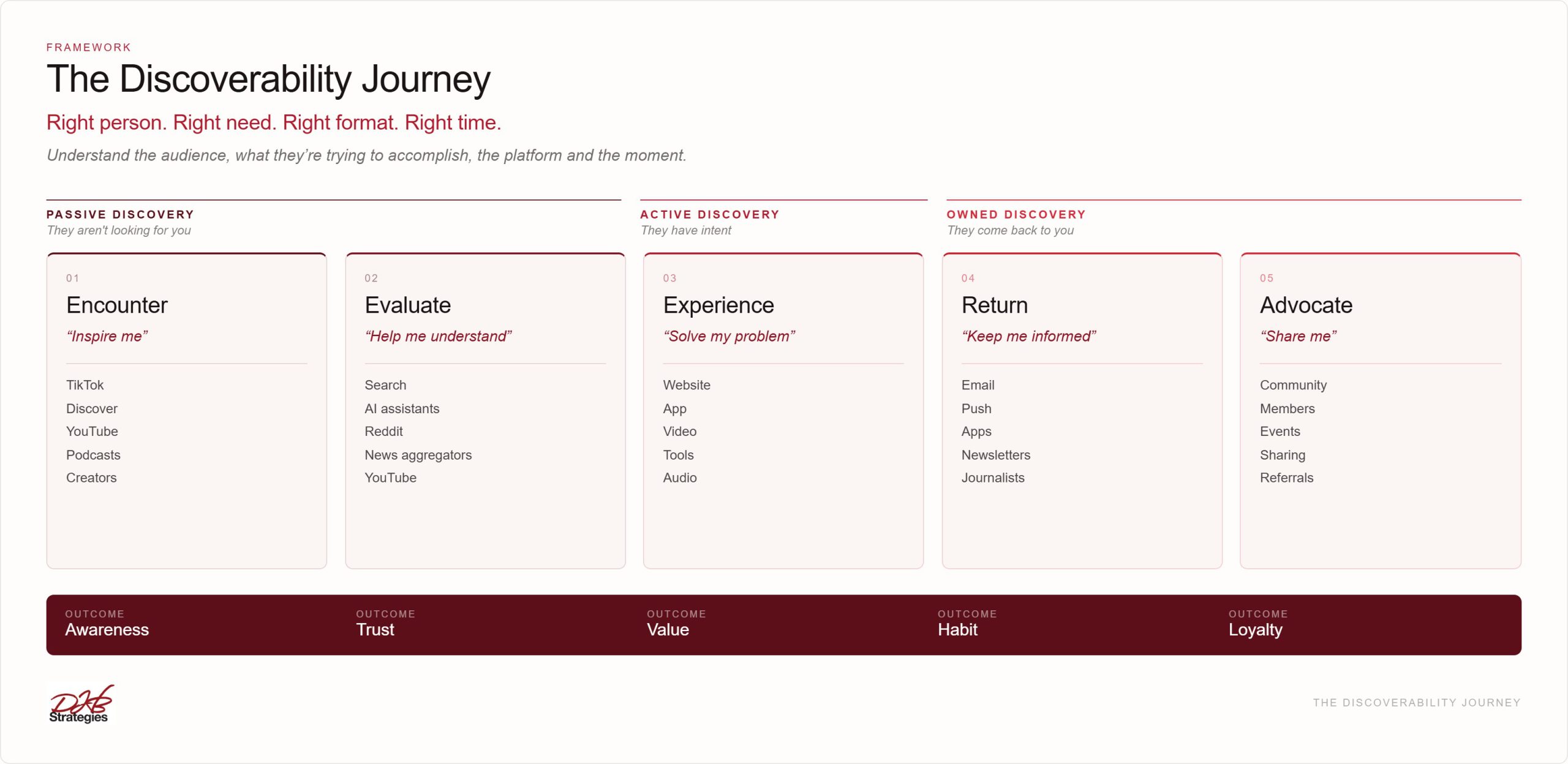
Every owned off-site signal needs to corroborate the information on-site. Encouraging individuals to disclose information and share content is a brilliant thing, but it needs to be accurate and consistent.
A person or team needs to own this.
Should you be so inclined, you can watch or listen to my dulcet tones instead of reading:
What An SEO Audit Should Do Now
Everything it used to do, and more.
Search remains the most valuable last-click channel for most publishers. Contrary to popular belief, we need it and Google needs us—although they have an extremely unusual way of showing it.
Saccharine sweet whispers about how much they care about the content ecosystem flies in the face of their actions.
The four primary pillars for auditing in 2026 are:
- Technical SEO.
- Content and on-page SEO.
- E-E-A-T.
- Entity (brand) consistency.
At least, in my opinion. We are trying to create efficient, reachable websites with brilliant content that people and bots implicitly trust. These four are non-negotiables—although you can cut them however you wish.
AI readiness is baked into these four areas, but for most publishers, LLMs have questionable value. Make sure you assess a site’s blocking protocols and whether they are solely relying on the robots.txt.
Yes, links and mentions are still crucial. But not everyone needs to invest in them. I have bundled them under E-E-A-T, but if they are hugely important to your brand, then consider running a more detailed audit of them in future.
The Most Important Thing: Value
You are not driving traffic or rankings or visibility. You are driving value. Or maybe just trying to stop the rot.
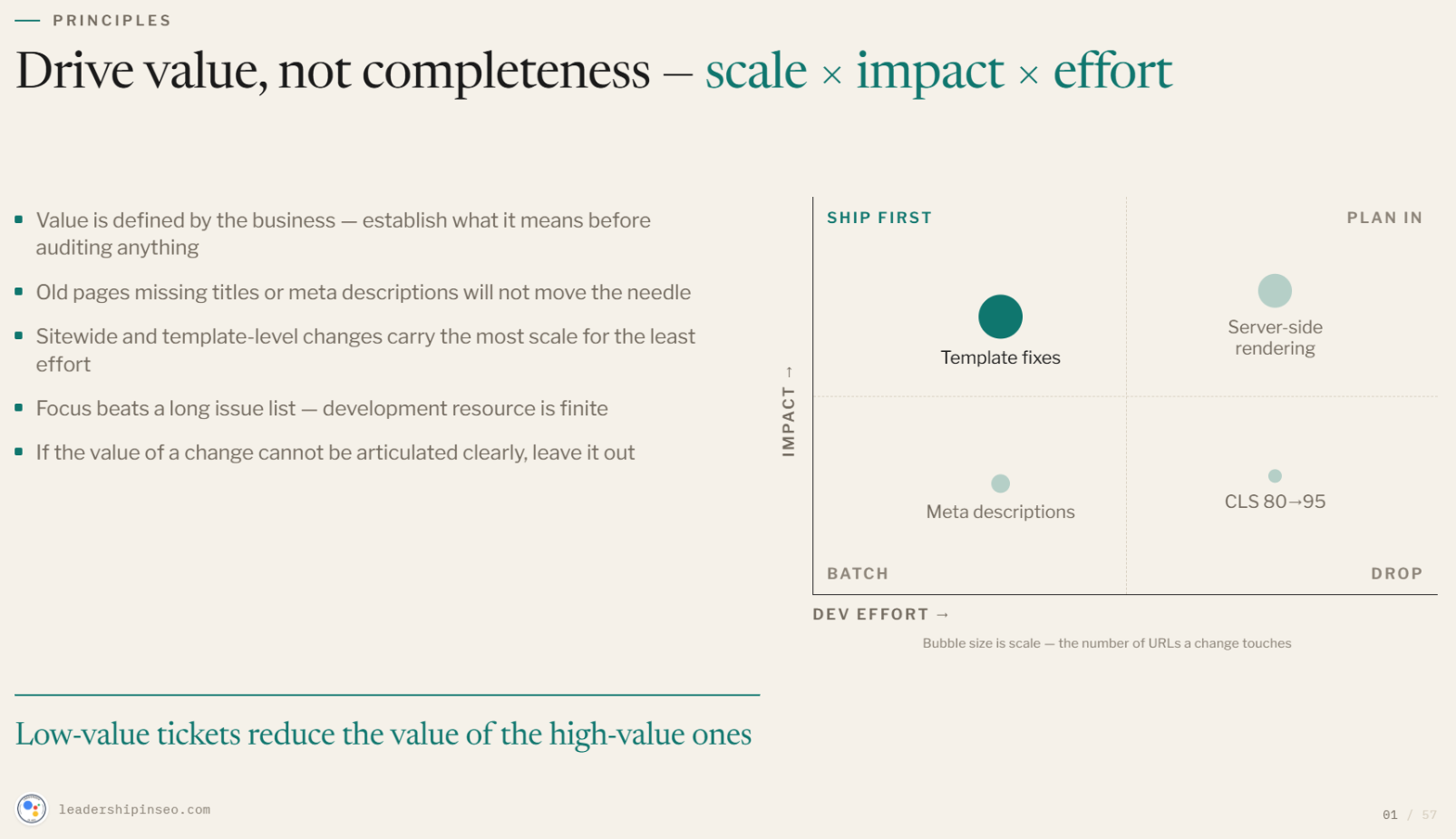
Yes, value is defined by the business’s goals. Whether you are trying to increase ARPU, subscriptions, or affiliate revenue, do not just blindly jump in. Try to align your work with tangible business goals that make your stakeholders look good!
I suggest creating a longer list of issues, aligning them on the scale x impact x effort scale, and creating a quadrant to show you a) understand how this business works and b) avoid a long list of issues.
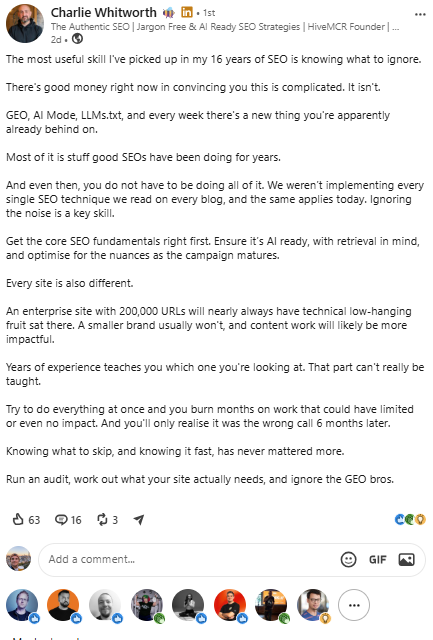
Not everything needs fixing. As Charlie puts it, knowing what to ignore is as important as knowing what needs attention.
Sitewide and template-level changes tend to have the largest scale. Recommendations that directly relate to key business goals tend to have the highest impact.
Make sure you can articulate the benefit of each suggestion to prevent yourself looking or sounding stupid—none of us know everything.
How Do I Know Where To Start?
Larger sites typically have more to gain from technical SEO improvements. The majority of medium to large publishers sit on the right-hand side of this graph. Smaller to medium-sized publishers typically need more brand presence and awareness in the right places—digital PR, link building, and entity SEO.
It makes sense to run phased audits. Box off a week or two of time. Do not overstep the mark here. The initial audit is to identify any opportunities or fires that need attention.
If there aren’t any, happy days. We either part ways as satisfied SEOs and clients, or move onto agreed-upon phase two pieces of work like competitor analysis or specific content drilldowns, possibly with some monthly retainer agreed.
Pre-Auditing Essentials
This cannot be exhaustive, however, here are some non-negotiable questions:
- What are your company goals and KPIs? What do you need from SEO?
- How do you generate value (subscriptions, advertising, affiliate revenue)?
- What page templates do you have? How can we identify them? (Typically, you can use custom extraction to identify content at a page template level.)
- How large is the site and how much do you publish each day?
- Who are the key stakeholders?
- How much development resource is available?
- Who are your key competitors and what countries matter most?
- Is this a single language or location site?
- Are there any obvious issues to be aware of or any previous migrations we should know about?
All of this is designed to help you understand the business and suggest initiatives that drive value before you dive headfirst into the shallow end.
Technical SEO Auditing
Technical SEO still presents a real opportunity for publishers.
Good tech SEO raises the ceiling. Excellent content can be suppressed by a slow, inefficient website that makes crawlers (and users) work harder than they should have to.
Crawling, rendering, and indexing costs money, and Google has made it very clear that unless your content adds value, it is not going to stay in the index. Famously, Google really, really likes money.
Reached
Can bots crawl, render, and index (in Google’s case) your content?
Barry Adams, as ever, has some excellent advice on how Google crawls your website. In my opinion, the most important concepts to understand are:
- Have you blocked any important content via the robots.txt file? (And is any of it still indexed?)
- How Google crawls and renders content.
- Why client-side Javascript is something you generally want to avoid (for important on-page content).
- Why pages drop in and out of the index.
- How to measure and assess the crawl stats and page indexation report.
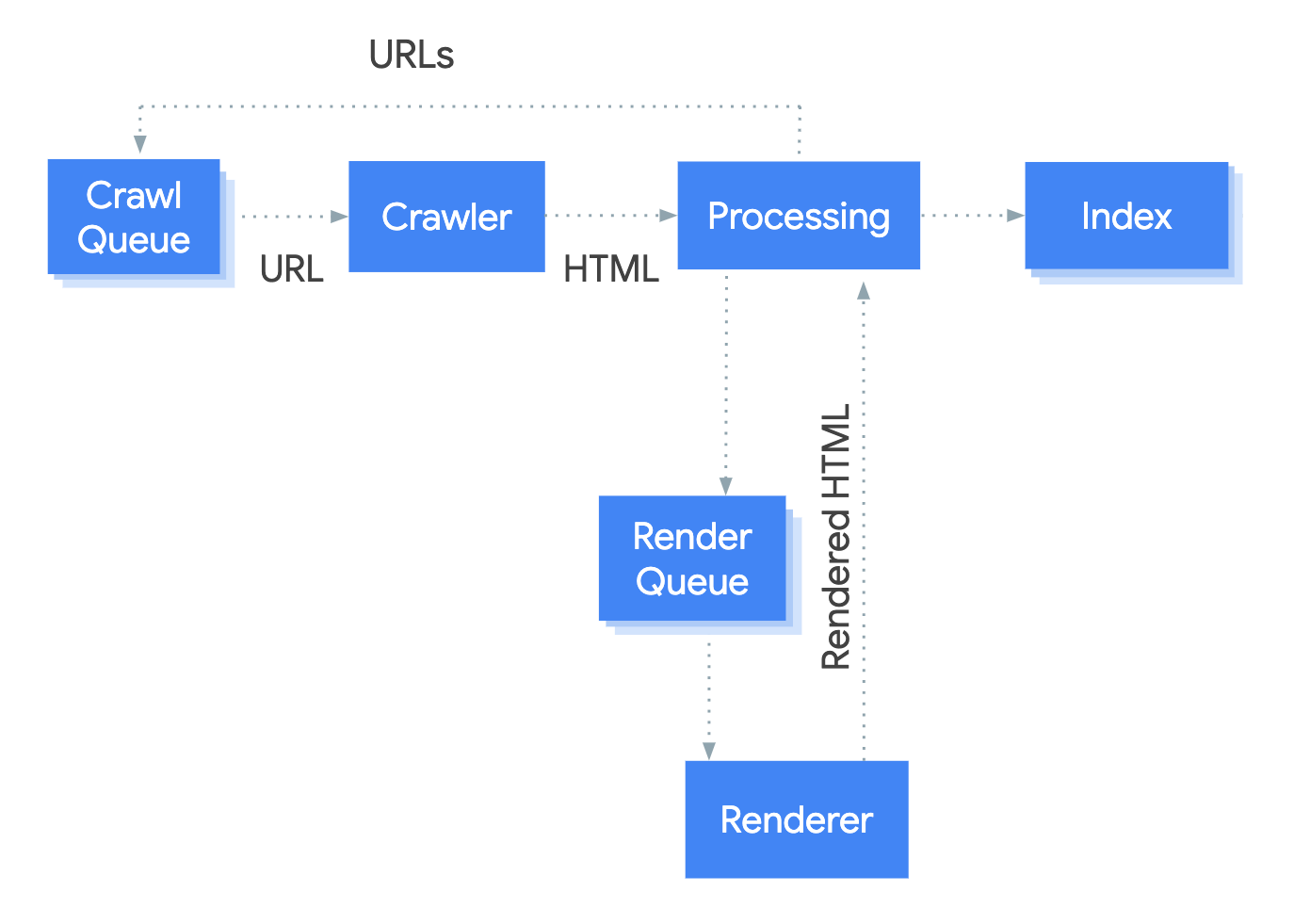
Generally, I would think of it like this: indexation is partly dependent on Google’s ability to reach your content and content quality—led by engagement metrics. Does your content meet the quality thresholds to stay in the index, or does it flicker between indexed or crawled/discovered—currently not indexed?
SEO is all about patterns.
Whilst the page indexation report has limitations (1,000 rows is never comprehensive for a publisher), you can get around this by creating multiple Search Console accounts, or with a tool like Indexing Insight.
PSA: Daniel Foley Carter’s guide to solving non-indexable pages is superb.
Crawl budget is an enormous topic in itself and ties in very closely with the crawl stats and indexation reports. While I cannot cover everything here, some of the most common issues with publishers are:
- Site search pages are being indexed.
- A high number of indexable parameter URLs (MarTech will tell you these are important. They aren’t).
- Inefficient caching policies or unnecessary versioning of files.
- Site speed, brand strength, etc.
Take this example from a crawl stats report:
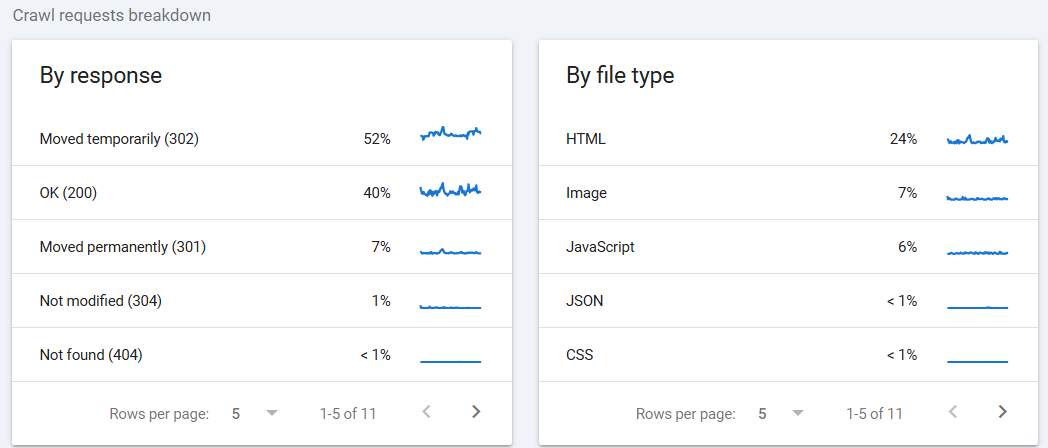
Underneath the main property, you get a breakdown of where Googlebot spends its time. Here, you can see 52% of the bot’s resources are going on temporarily moved (302) files. That is a very high number and one that would require further investigation.
On larger websites, this is exactly the kind of technical debt that can move the needle.
News articles (outside of live blogs) may be crawled once and not again for hours, such is the volume and pressure associated with news and Top Stories.
If important content requires client-side JS, it may never get picked up by Google until after the event, when it is essentially redundant.
Understood
Semantic HTML and nested subheadings are the foundations of accessibility and an easy-to-crawl and “understand” page. You may be writing content for humans, but you are structuring it for bots—now more so than ever.
The irrepressibly great Jono Alderson has a really brilliant article on why semantic HTML still matters. Search engines, accessibility tools, AI agents, and task-based systems all rely on structural signals—markdown is a cheap workaround to avoid fixing the mess we created.
“HTML isn’t just how we place elements on a page. It’s a language—with a vocabulary that expresses meaning
Tags like <article>, <nav> and <section> aren’t decorative. They express intent. They signal hierarchy. They tell machines what your content is, and how it relates to everything else.”
I appreciate this can be a little complicated, but it is the foundation of accessibility too—for bots and humans. So it is important. Fortunately, there are some very good tools you can use here:
And this is an excellent way of approaching a semantic HTML audit.
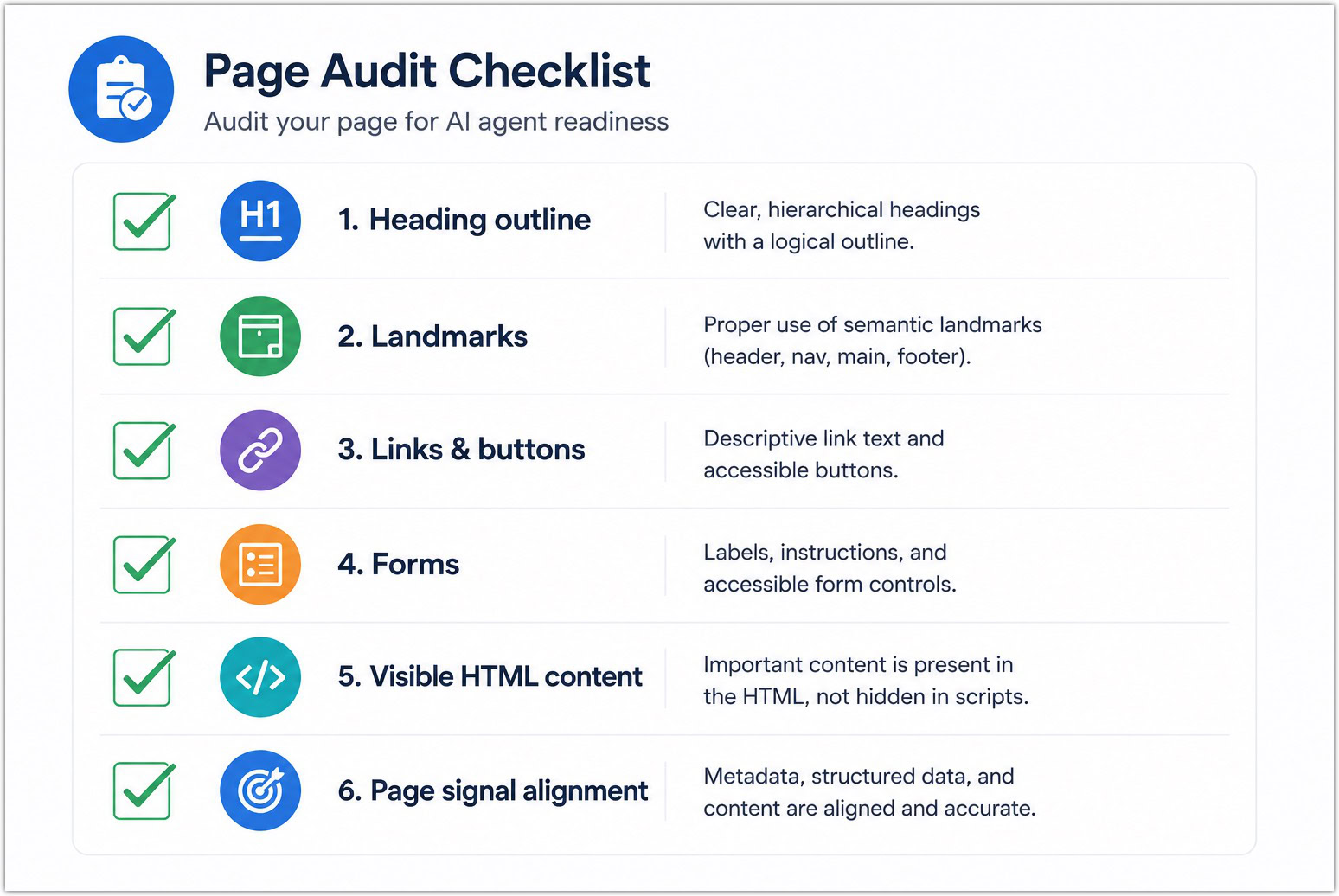
You can run the HTML through Claude Code with very rigorous instructions to corroborate and contrast the findings too. As ever, you do not need to fix everything. Just the most egregious errors—which are colloquially known as div soup.
Fake heading (part of a div soup page): <div class=”h2″>Plan includes</div>
Real heading: <h2>Plan includes</h2>
Consistent, accurate, and all-encompassing structured data supports the disambiguation of your article.
(and is treated simply as raw text in the page), it still has tremendous merit in the reduction of ambiguity. I recommend reviewing structured data at a page template level and comparing your structured data setup to some of the best in the business—The NYT always springs to mind.
This has real benefits for brands and people as entities and for trust as a construct of E-E-A-T, which we will come onto.
Then you are looking to remove any other inaccuracies—consistency of on and off-page dates is a classic publisher problem that only technical SEO can solve. Understanding is a combination of accuracy, accessibility consistency, and disambiguation.
To really dive deeper on accessibility and agent readiness, this article by Jon McAlpin on Accessibility Tree Use Cases is better than anything I can produce. Complete with an accessibility tester too.
Linking
You cannot perfectly assess the internal linking of an enormous enterprise publisher. Things move too quickly, there is too much noise, and there will almost certainly be articles present from the inception of the internet.
But I think you can do a few simple things to assess quality and set the publisher up for future success:
- Does your site have an egregious number of broken links and redirect chains or loops? Almost all publisher sites do, just make sure you fix the worst offenders. Broken or redirecting links in the menu or at a template level, redirect chains with five or more in the sequence.
- Does the navigation allow for easy accessibility for users and bots?
- Is the important content within easily navigable from the homepage?
- Is important evergreen content prioritized (at a topic and article level)?
- Do news articles effectively link to said important evergreen content and topic pages?
- Are assets like tools, products, and revenue-driving sections given suitable visibility?
- Is pagination appropriately crawlable?
- Are links generally in an
<a>HTML element (also known as anchor element) with anhrefattribute? Most links in other formats won’t be parsed and extracted by Google’s crawlers.
Once you have done this, I suggest putting some future processes in place that ensure news content effectively spreads link equity (and traffic) across the site via well-placed internal links.
As a rough standard, aim for a link to a topic page and a relevant evergreen or news article in the first couple of paragraphs.
In an ideal world, you can automate or semi-automate quality internal linking. If you have a Google News Sitemap, you can scrape the content of each page and identify appropriate links to relevant topic and evergreen pages using an LLM’s API and some form of NLP to disambiguate.
Served
OK, so now the content has been reached, understood, and linked—now it needs to be served effectively and efficiently. This means it needs to load quickly.
Page load speed has significant connotations for how effectively bots consume your content. A faster, more efficient site will be crawled to greater depth over the same time period than a clunky one.
We do not have to be site speed experts to understand if there is a problem. I think the most applicable approach is to audit speed at a template level in three passes (one of these is on the client):
- Field data: The Search Console Core Web Vitals report is entirely made up of Google’s field data and categorized by issue. Whilst this may not align with your template setup, there is a very good chance it does.
- Lab data: Dev Tools and Lighthouse reports use lab data. You can download the Devtools MCP and use it with Claude Code to help you identify and assess issues and to build up a picture at a template and sitewide level.
- RUM data: This one is on the client. Real User Monitoring data is essential to see how users from different places, on different connections and devices interact with your site. You need to see measurable improvements over time if you make these changes, and this is the most reliable way to do that.
Essentially, you are using field data to highlight issues, lab data to identify how those issues manifest, and RUM data to monitor real people and whether the changes have a positive effect. When using Devtools MCP, you can use the lab data to review the difference between cold and consented user experiences on page.
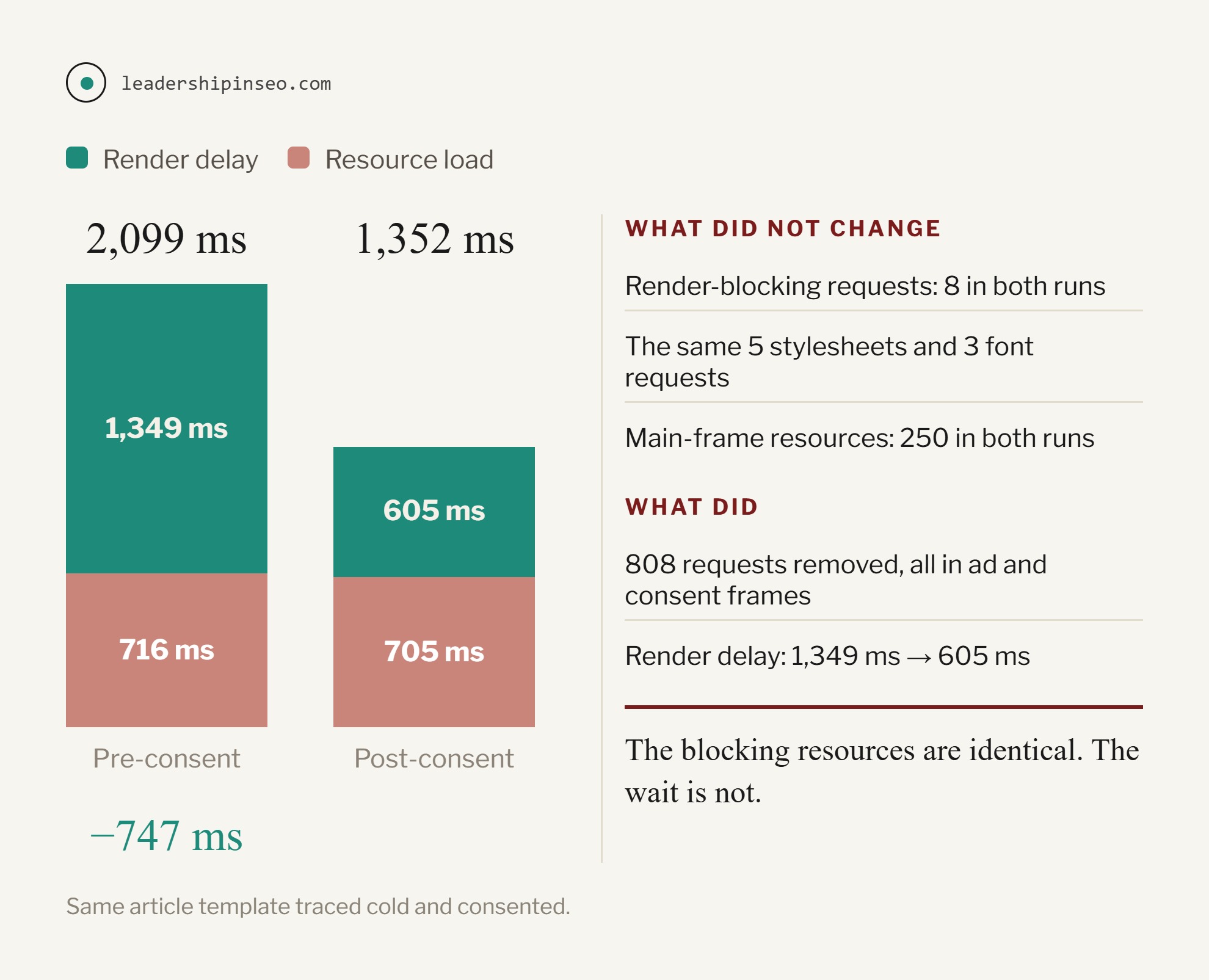
This is important to understand, because a first-time user will almost always have a slower experience. Not every visitor has the same experience, so you want to optimize for the majority of your user base first, or the ones receiving the worst experience.
There are very good alternatives here. A PageSpeed Insights report includes both field data and lab data. Field data shows real-world user experiences from the Chrome User Experience Report (CrUX), while lab data shows simulated performance tests run by Lighthouse in a controlled environment.
I would highly recommend using CrUX Vis to compare your site’s loading against the competition in search. Speed is largely engagement-related. Slower sites burn through users. If your competition has a faster loading template, you are already on the backfoot.

If you are comfortable with the fundamentals of core web vitals, field data, and lab data, then I suggest downloading the devtools MCP and configuring it with Claude Code.
You can generate excellent lab vs field comparisons and thorough investigations into each metric, including CrUX data if you have a Google Cloud account.
Miscellaneous
Miscellaneous really does not do justice to some very important topics, but without this post spiraling further out of control, I am going to cover them in a couple of sentences.
We have not covered international SEO or auditing hreflang tags (although this excellent tool from Chris Lever is absolutely the best for it), but it is not a requirement for everyone.
- Do you create a unique, internationalized experience on different versions of your site?
- Do you auto-redirect users based on their location (please do not do this—prompt, do not auto-redirect)?
- Do you publish content unique to that region?
- Is the path to conversion appropriately internationalized?
This really is not comprehensive, but it is a pretty decent start.
And as bot managementcontinues to grow in importance, you really want to assess your robots.txt and CDN-level blocking. Is it doing what you want it to? Is it setting your users up to have the best possible experience? Is it positioning your site in a position of strength, not weakness?
If you are blocking training data bots, just make sure you understand the knock-on effects. Ditto if you allow them.
Content
Content has to stand out. It has to be unique, or at least have unique elements, and it should not be created solely for SEO purposes. Content should be created with your audience in mind.
We can audit some of these things in a relatively straightforward manner. Others require a little more nuance and actual thinking. You cannot just automate everything.
Fundamentals
I have written about how to create great content and get it found at length. These content tenets should be applied ubiquitously.
- It answers the question
- Entity-first headlines and opening paragraphs
- Well-structured, with relevant, nested subheadings
- Short, snappy paragraphs, written in a readable manner (you can use a free online readability checker, although I would not recommend sharing this with the writer)
- Bullets and tables to break the content up with structured data (not schema)
- Clickable, unique images (typically with people in them)
- Unique elements (data, stories, video, or visuals and real, lived experiences are all good examples of this)
- Relevant, topical internal links
- Created (or updated) at the right time
- An appropriate level of freshness
You can score freshness using this distance calculator or—if you are lucky enough to work on a site with well-structured sitemaps—this freshness checker.
Measurement At Scale
Content popularity is measurable at scale. Organic traffic, branded search, engagement, backlinks, and mentions can all (broadly) be measured by subfolder or topic. Particularly if you have access to some third-party data from somewhere like Similarweb.

This can be applied sitewide or at a page level. There are obvious limitations here, but it is a very useful starting point and can help identify areas of the site with declining engagement and potentially weaker content.
Query Counting
This is, I think, one of the most under-utilized and exceptionally useful tools in an SEO’s arsenal. Particularly when you are working on such large sites, sometimes publishing hundreds of articles per day.
On said chunky sites, you are looking for patterns. Patterns that indicate whether your content is valued by users and search engines. Query counting exposes how search engines are evaluating your site over time.

If you split your Search Console account into multiple properties (as you should), you get access to a treasure trove of data with brilliant tools like SEO Gets (where this screenshot was taken) or SEO Stack. SEO Gets is a slightly more budget-friendly option; SEO Stack is more all-singing, all-dancing.
Both are absolutely brilliant.
While these tools have so many brilliant options—page indexing, alerts, cannibalization, Google Analytics 4 integration, content decay mapping, et al.—query counting alone is worth the investment. Particularly for publishers who have a suite of evergreen content.
If you segment your site effectively, highlight your branded queries, content clusters, important topics and pages, and use the automated alerts within these tools, you can remove so much of the hard work associated with typical content auditing.

I would not recommend doing a content deep-dive as part of a first-phase SEO audit. But I would recommend identifying areas of the site where you are seeing out-of-the-ordinary growth or decline. That is how to create a second-phase project.
News
All of the above still applies to news, albeit page structure is less important on shorter articles.
Much of what you can do with news as an SEO is helping editorial teams hit some basic standards and understand how Google ranks news sites.
We know that news content needs to be right on first pass when it goes out into the wild. We know that people broadly search by using entities: people, places, organizations, et al. If nothing else, headlines and images need to be on point.
And you want to establish your Top Stories presence, preferably compared to the competition. I like to know how your publishing volume compares to the competition in terms of articles by topic, live blog, video, et al.
And that your most important articles are linked to from the homepage, accessible via a Google News Sitemap, and have reliable authorship presence.
News Checklist

For your most important content and content most likely to get picked up in Google Discover, make sure you amplify it early. Pushed on branded and journalist social channels, on the homepage, in email newsletters. Make it outperform the expected engagement.
This is called The Golden Hour. I would add amplification to any checklist.
Evergreen
Google may have some measurable ways of “scoring” evergreen content, and I have written about how I think you should do evergreen content in the AI era.
Most traditional, more commoditized, keyword-led evergreen content is not as valuable as it once was. So, we need to really establish its importance in the ecosystem. Is it worth keeping and renewing?
If you can determine this content sits out of scope and is not hitting key micro-conversions (registrations, return visits, engagement, etc.), kill it. Publisher sites are so sprawling that content pruning is never a bad idea. Particularly if the content sits outside of your core proposition.
Evergreen Content Checklist

Evergreen content must be written for people and answer the question. You cannot survive without uniqueness or legitimate expertise, and it must be structured effectively for people and bots.
In terms of assessing success, it needs to continue to attract links and quality traffic months after publication. While I am not for updating a page every week, you should time updates to spikes in demand and distribute accordingly.
Aleyda has a brilliant checklist for the types of content to prioritize and de-prioritize, which align almost perfectly with the effort required to create something brilliant and click resilience in a zero-click world. I think it ties in very nicely with quality evergreen content.
Google Discover
What works well in Discover tends to work well in search. I have written about how Google Discover works and how to analyze it at scale, which might be good places to start here.
While Discover surfaces news and evergreen content, the clickless sphere is becoming less publisher-friendly. Your content really has to cut through for it to work—ideally you would be prioritizing journalist-led, people-first content in video format too. The platform is still an enormous driver of traffic.
Discover Checklist

The basic principles for Discover success are the same.
Clickable content that does what it says on the tin. A fast-loading experience, with content that is easy to “read” for people and bots. The image and headline are more important—the max-image-preview has to be set to large and the image must be 1200px wide.
The OG headline gets picked up in Discover, and as the social headline, it has the chance to be more evocative and engaging. Use it. Do not just rely on the SEO and on-page headlines.
Really consider the value you are going to get from Google Discover. You can absolutely generate reach and you will get far more traffic as a paywalled subscriber if you open the surface up. But is that what you need?
E-E-A-T
I wrote a very long article about what good E-E-A-T looks like for publishers, and I do not see any reason to deviate from it. The only updates are to include more entity optimization and analysis work as part of the audit—which has morphed into its own section.
Contrary to popular belief, it is not a ranking factor. E-E-A-T is more of a qualitative measure of page and site quality. Unless you are a publisher heavily focused on really YMYL topics, this is unlikely to directly move the needle.
But it is a qualitative measure used by Google’s human SERP reviewers and a core part of Google’s Quality Rater Guidelines. While it has its flaws and detractors, it is still very useful for publishers.
“Trust in news has fallen in 29 of our 48 markets this year, resulting in a drop overall to the lowest level we have recorded since we started to measure trust in 2015 (37%).”
Part of the beauty of E-E-A-T is that the majority of the non-negotiables rarely require significant development work. In an era where consistency matters and users consume your brand away from your own site, you need to own the conversation while being a trustworthy source as best you can.
I suggest breaking it into five key sections:
- Links and mentions.
- Sitewide.
- Desk-level.
- Page-level.
- Off-site.
Links And Mentions
The value of a backlink has steadily declined as SEOs got better at playing the system. But they are still hugely important—although not something I pay much attention to, particularly for larger publishers.
If your brand (personal or professional) makes a positive impact in the industry, you should monitor where and when you are picked up. Who is talking about you, your product, your brand? Why? Are you making the right impact?
To me, backlinks and mentions are byproducts of doing great things. But you still need to know if they are a limiting factor. If you are a smaller brand trying to cut through the noise, I suspect you need to invest in digital PR and brand-building campaigns and opportunities.
To assess both, I would do two things:
1. Review Backlinks At A Subfolder-Level
Keep it really simple. Compare your backlink acquisition at a subfolder level against your core competition.
- How do these track over time?
- Are you outperforming the competition?
- Are you generating links from quality sources?
2. Use A Tool Like Alertmouse For Mention Tracking
Setup brand tracking in Alertmouse for you and your competition.



