
Flock’s Defenders Are Missing the Point
This story originally appeared in The Algorithm, our weekly newsletter on AI. To get stories like this in your inbox first, sign up here.
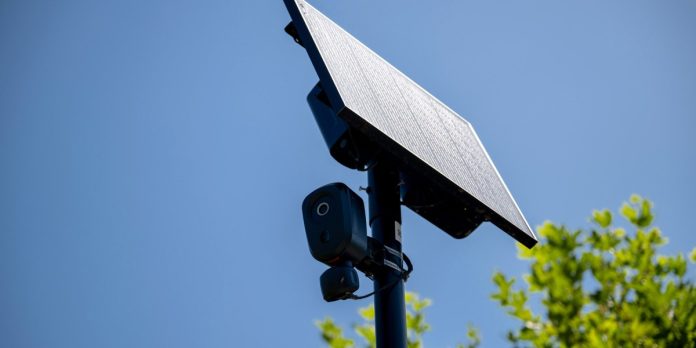
Flock, the police-tech giant that runs a network of roughly 120,000 automatic license plate readers across the US, announced platform changes last Thursday aimed at stopping officers from using its tools for illegal or illegitimate purposes.
That includes stalking. The Washington Post recently identified 50 cases where officers misused systems from Flock and its rivals, often to stalk and harass women. One woman in Wisconsin said her ex-boyfriend, a police officer, searched for her car 179 times. Another woman was stalked by the chief of police, with no one to report him to.
Flock’s response includes requiring officers to enter a criminal case number before running a search and using software to flag abnormal search patterns. But those changes come with significant loopholes. Officers can enter bogus case numbers, just as they’ve lied to get around other Flock safeguards. The new rules also don’t address broader concerns from civil liberties and privacy groups that Flock is turning what was sold as a crime-stopping tool into a mass surveillance network. Those criticisms have fueled a backlash, with some cities canceling contracts and some states pursuing legislation to limit or ban license plate readers outright.
Amid the backlash, there have been arguments defending Flock: If these cameras help solve crime, what’s the big deal? On a good day they might help catch a kidnapper, and if not, they’re just snapping pictures of cars that nobody will bother to review.
Putting aside the unresolved question of how much Flock’s systems actually do solve or prevent crime, this misses a more important issue: What kind of crime-fighting system has Flock chosen to build? Its network works the way it does because of deliberate decisions about what information to collect, who can search it, how long to keep it, and how widely to share it. Those decisions set the terms of the bargain between security and civil liberties. Believing technology should help solve crime doesn’t mean blindly accepting those terms.
The Case Number Requirement Is Easy to Bypass
Take Flock’s new requirement that officers enter a case number before running a search. The intent is to ensure searches have a legitimate purpose. But Flock confirmed to MIT Technology Review that it doesn’t verify those case numbers, so an officer can simply enter fake information. A stronger system might require case numbers that match police department records — a more intrusive integration, perhaps, but also a far tougher safeguard with a more useful audit trail.
Kidnapping Cases Don’t Require a National Surveillance Grid
Consider the use case Flock cites more than any other: finding kidnapped or missing people. Those efforts would clearly benefit from Flock’s nationwide camera network. But if Americans want officers to tap into that network only for this purpose, the system could be designed that way. Searches tied to an active Amber Alert or similar emergency could access larger amounts of data from surrounding cities. That approach would preserve the network’s emergency value without requiring the public to accept mass surveillance as the price.
Data Retention Could Be Far More Conservative
There’s also the question of how much data Flock collects and how long it’s kept. Flock mostly operates as a national network — police in one city or state can search data collected in another, and agencies can retain that data for months or years. Yet Flock itself says 90% of searches happen within a week of an incident. That suggests another possible bargain: keep and share data only as widely and as long as it’s genuinely useful for solving crimes. The company recently changed its recommended retention time to seven days, but agencies can still hold onto data as long as they like or local laws permit.
Narrower Surveillance Would Threaten Flock’s Business Model
Flock could design its surveillance to be much narrower. But that might not satisfy its critics. Chad Marlow, a senior policy counsel at the ACLU, half-joked to me that the most acceptable Flock contract by his standards is “one that is never signed,” and emphasized that the best way to set limits on surveillance isn’t with new Flock guidelines but with new laws. Flock CEO Garrett Langley, for his part, said he’ll “probably always have a different view than the ACLU.”
Narrowing the scope would also undercut Flock’s entire pitch to police departments. License plate readers have been around since the 1990s, used for tolls and ticketing. Flock’s business model — and its recent $8 billion valuation — depends on turning its cameras into a massive network that collects rich data and lets police departments make sense of not just their own data but everyone else’s.
Flock’s hand might soon be forced. Cities have canceled contracts. Some have moved to competitors, while others are pausing as residents decide how they want this technology used and write new rules for police to follow. The result could be that communities set their own terms for how technology helps solve crime — and how much surveillance they’re willing to accept in exchange.


